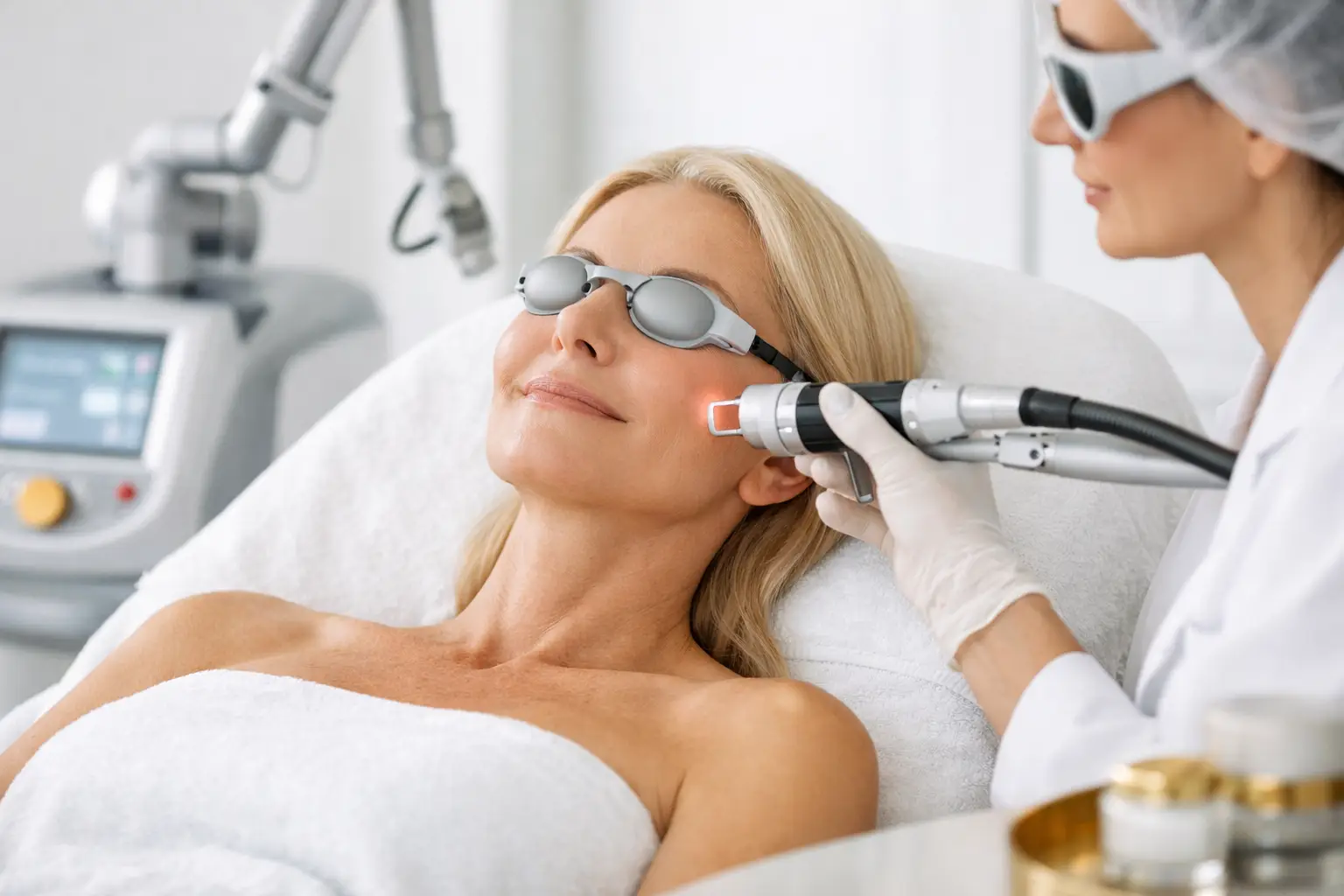
A thoughtful CO2 laser review should look beyond dramatic before-and-after images. CO2 laser resurfacing can create a meaningful improvement in texture, lines and skin quality, but it is also a treatment that asks for preparation, appropriate downtime and expert aftercare. For the right patient, the result is not a different face. It is smoother, fresher-looking skin that still feels entirely like you.
What is CO2 laser resurfacing?
CO2 laser resurfacing is an advanced skin renewal treatment that uses precisely controlled laser energy to create tiny treatment channels in the skin. This stimulates the natural repair process and supports the production of new collagen, while removing damaged surface cells.
The treatment can be adjusted to suit different concerns and areas of the face. A lighter approach may focus on refining texture and restoring radiance, while a more intensive treatment may be considered for deeper lines, pronounced sun damage or certain acne scars. This level of control is one reason CO2 laser treatment remains highly regarded for facial rejuvenation.
Unlike treatments designed mainly to relax expression lines or restore lost volume, CO2 resurfacing works on the quality of the skin itself. It can improve how skin reflects light, feels to the touch and responds to make-up. That distinction matters when the main concern is crepiness, uneven texture or a tired-looking complexion rather than facial volume alone.
CO2 laser review: what concerns can it improve?
A professional assessment is essential because no laser treatment is right for every concern. In suitable candidates, CO2 laser resurfacing may help improve fine lines around the mouth and eyes, rough texture, enlarged-looking pores, uneven tone, sun-related damage and selected types of acne scarring.
It can be particularly valuable for patients who feel their skin has lost clarity and firmness over time. The gradual collagen response can soften the appearance of fine etched lines and give the complexion a more polished, rested appearance. Results develop progressively, rather than appearing artificial or sudden.
However, CO2 laser resurfacing is not a shortcut for every sign of ageing. Deep folds caused by volume loss may benefit more from a carefully planned combination of treatments. Active breakouts, certain scar patterns and pigmentation concerns also require a personalised discussion. The most elegant outcomes come from treating the cause of the concern, not simply choosing the strongest procedure.
What happens during treatment?
Your appointment begins with a detailed consultation. Your practitioner will assess your skin quality, medical history, lifestyle, previous aesthetic treatments and expectations. They will also discuss the level of resurfacing that is appropriate for your skin and the downtime you can realistically accommodate.
On the day, the skin is cleansed and a suitable numbing protocol is used to support comfort. The laser is then passed over the planned treatment area in a controlled pattern. Many patients describe a sensation of heat or prickling during the procedure, but comfort measures make the experience manageable.
Treatment time depends on the areas being addressed and the intensity selected. The face may be treated as a whole, or attention may be focused on areas such as the mouth, cheeks or eye contour. Precision is central: the aim is to improve the skin without over-treating it.
Recovery: the part that deserves honest planning
Recovery is the principal trade-off with CO2 laser resurfacing. Skin will usually look red and feel warm after treatment, much like a pronounced sunburn. Swelling is common in the first few days, particularly around the eyes, followed by dryness, flaking and peeling as the skin renews itself.
The visible recovery period varies according to the treatment depth, the area treated and individual healing. Many patients allow around one to two weeks before returning to social plans or work-facing commitments, although residual pinkness can remain for longer. A lighter treatment may involve less downtime, while more intensive resurfacing typically requires greater patience.
Aftercare is not an optional extra. Gentle cleansing, diligent moisturising, avoiding heat and friction, and strict daily sun protection are essential while the skin heals. Picking or exfoliating peeling skin can interfere with recovery and should be avoided. Your practitioner should provide clear, individual aftercare instructions and remain available if you have concerns.
For patients travelling or planning a holiday on the Costa Blanca, timing also matters. CO2 laser treatment is best scheduled when you can avoid direct sun exposure and give healing the attention it deserves. A consultation can help you choose a safer, more comfortable window in the year.
When will you see CO2 laser results?
The first improvement becomes visible once the initial healing phase has settled. Skin often appears clearer and softer within several weeks, but collagen remodelling continues beneath the surface for months. The final result is therefore gradual, refined and natural-looking.
Longevity depends on treatment intensity, skin biology, sun habits, skincare and the ageing process itself. CO2 laser resurfacing can deliver long-lasting improvement, especially when supported by consistent sun protection and a sensible skincare routine. It does not stop skin ageing, but it can reset the appearance of damaged or depleted skin in a convincing way.
Some patients achieve their desired result in one well-planned treatment, while others may benefit from a staged approach. It depends on the concern, the resilience of the skin and how much downtime feels realistic. A responsible clinic will not promise identical results for everyone.
Is CO2 laser safe for all skin types?
CO2 laser technology is powerful, which is why careful patient selection matters. Your practitioner must assess skin tone, pigmentation history, sensitivity, scarring tendency, current skincare, medications and any relevant health considerations before recommending treatment.
Potential side effects include temporary redness, swelling, dryness, sensitivity and changes in pigmentation. Less commonly, complications such as prolonged redness, infection or scarring can occur. These risks are reduced, though never completely eliminated, through qualified treatment planning, appropriate laser settings and conscientious aftercare.
People with active skin infections, open wounds, a history of problematic scarring or a recent tan may need to postpone treatment or consider a different option. Deeper skin tones can require especially careful planning due to the higher risk of post-inflammatory pigmentation. This is not about excluding patients from rejuvenation. It is about selecting the safest and most suitable route to an even, natural result.
Is the downtime worth it?
For many patients, the answer is yes when texture and quality are the priorities. CO2 laser resurfacing offers a degree of renewal that gentler treatments may not match, particularly for established lines, sun damage and textural irregularities. The trade-off is that it is not a lunchtime procedure.
If you need an immediate return to public-facing work, have an important event approaching or prefer minimal visible recovery, a different treatment plan may be more appropriate. Conversely, if you are willing to plan a period of quieter recovery, CO2 laser resurfacing can be a highly rewarding investment in long-term skin quality.
At LA Clinik, the focus is always on subtle rejuvenation rather than an over-treated appearance. A consultation allows your practitioner to assess whether CO2 laser resurfacing suits your skin, discuss realistic healing time and create a plan designed around your features, lifestyle and goals.
Beautiful results begin with good judgement. If you are considering CO2 laser resurfacing, choose a consultation that gives equal attention to your safety, your recovery and the natural confidence you want to see in the mirror.
Zostaw odpowiedź